Updated 14 August 2026
Most divers hit a point where the Open Water card stops being the thing that got them started and becomes the thing in the way. The deeper half of the Liberty wreck, the sites that only work on a bit of current, night dives, a camera you actually want to aim at something: all of it sits on the other side of the Advanced.
It is two days and five dives, and you do it by diving rather than by sitting in a classroom. Two of the five are fixed, the deep dive and the navigation dive, and you choose the other three. In Amed most people take the wreck dive on the Liberty and a night dive, because both are a short walk from the beach and neither needs a boat.
Do you want to develop your diving skills, make more dives with an Instructor, dive deeper than 18 meters, perfect your buoyancy and explore more than one destination in Indonesia? You can do all this and more by taking the PADI Advanced Open Water Course!
It’s all possible in one phenomenal trip and we’ll take care of the logistics so all you need to do is relax, enjoy your holiday and dive!
Structure of the Advanced Open Water Course
Did you know that the PADI Advanced Open Water Course involves 5 dives – 2 of which are mandatory for all divers and 3 of which you can choose? The 2 mandatory dives are Underwater Navigation and Deep Diving – both of which contain important skills which you’ll be able to apply in the future as a PADI Advanced Open Water diver.

Underwater Navigation Dive
(Mandatory dive) We are extremely fortunate that at all of our locations we have incredible House Reefs and local dive sites which are perfect for underwater navigation. You’ll learn how to navigate with a compass and how to use natural features to guide you. Did you know that lines in the sand run parallel to the shore? You’ll also measure your fin kicks so you know what distances you are travelling. You’ll learn a lot and it’s incredibly rewarding to find your way back unassisted.

Deep Dive
(Mandatory dive) At every Two Fish Divers resort, we have a choice of dive sites that extend to 30 meters – or more. During this dive you’ll go deeper than you have before and you’ll take a look at how depth affects color, pressure and you’ll be asked to perform a simple task at depth to assess if you’ve been affected by nitrogen narcosis. At many of our locations, going beyond 18 meters opens up the opportunity to see a whole new range of marine life!

The 3 optional dives
For the 3 dives which you can choose, you have a whole range of options available which include:
- Wreck Diving
- Fish ID
- Underwater Photography
- Peak Performance Buoyancy
- Night Diving
- Drift Diving
- Boat Diving
- Search & Recovery Diving
- Nitrox/Enriched Air Diving
- For the conservation-minded, there is also Project AWARE Diving.
Not every option is available at every centre, and some sites offer something genuinely special on a particular dive, for example diving with mantas or with turtles. Check out our location highlights below…
Which optional dives do people actually choose?
In practice most divers pick from the same four.
Wreck diving is the one people ask for first, and it is worth saying plainly that it depends on there being a wreck to dive. Amed and Sanur are the two centres that can offer it, both on the USAT Liberty at Tulamben. If the wreck is the reason you are doing the course, book one of those two.
Peak Performance Buoyancy is the one people are most glad they took. It is the dive that stops you fighting your kit, and it makes everything after it easier: your air lasts longer, your photographs get sharper, and you stop bouncing off the reef.
Night diving turns a site you already know into one you do not. Different animals come out, the ones you recognise behave differently, and a torch beam puts the colour back into everything it lands on.
Nitrox, or enriched air, is the practical choice. It gives you the advantage of more no-stop time at depth and/or less tired after diving , which is what you want on a day with three or four dives in it. It is also the certification most liveaboards and remote resorts tend to expect you to hold.
Advanced Open Water Course in Lembeh
Welcome to an underwater photographers paradise in the Lembeh Strait! You’ll capture images of some of the rarest and most unusual marine life on the planet. If you want to hone your photography skills during your Advanced Open Water course this is our number 1 recommendation.
Did you know that Lembeh and Bunaken are both reached from Manado? Combine the two and you get the macro and the walls in one trip, which is what our Walls and Muck Safari is built around. Looking for discounts in Lembeh and Bunaken? Check out our current special offers here…

Advanced Open Water Course in Bunaken
Stunning wall dives, incredible corals and turtles on almost every dive await you. If you want to get to grips with your buoyancy control during your Advanced Open Water course there is no better place than Bunaken.
Did you know that Bunaken pairs easily with Lembeh? The walls and the muck are completely different kinds of diving and both are reached from Manado, so our Walls and Muck Safari puts the two together. Looking for discounts in Bunaken and Lembeh? Check out our current special offers here…

Advanced Open Water Course in Amed
If wreck diving is your calling then this is the place to be. Take your Advanced Open Water in Amed and dive the USAT Liberty shipwreck which is home to over 400 species of fish and steeped in WWII history. Just a step off the beach reveals an incredible super-structure and you’ll be able to identify key components including the cannon, captains wheel and anchor.
Did you know that Amed pairs easily with Nusa Penida? The wreck and the wall diving on one side, the big animals and the cold water on the other, and our Bali Explorer puts the two together in a single trip. Looking for discounts in Amed? Check out our current special offers here…

Advanced Open Water Course in Nusa Penida
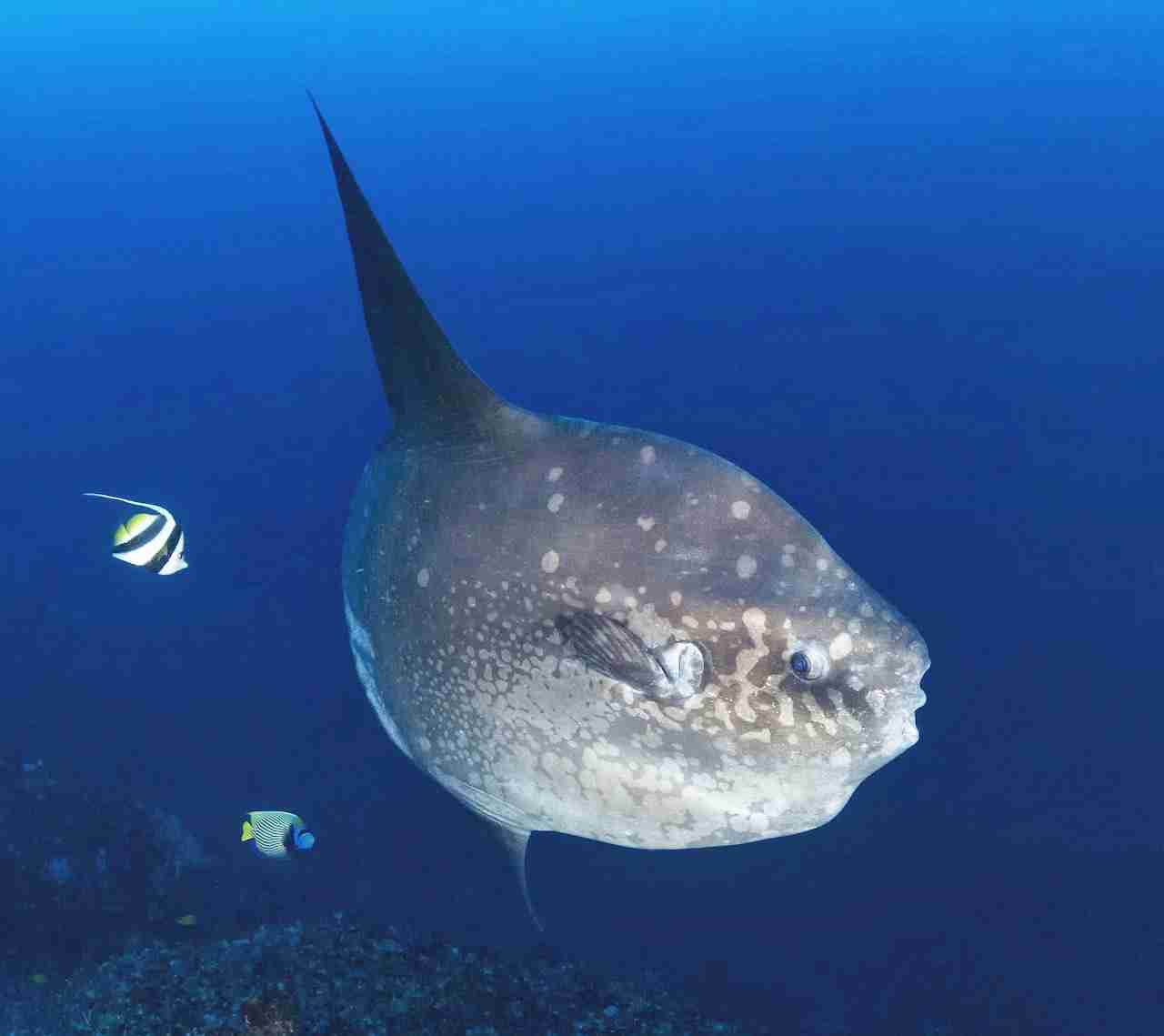
Take your Advanced Open Water and feel the exhilaration of flying over multi-colored reefs and through schools of fish when you drift dive around Nusa Penida. If you want to dive with “big fish” then this should be on your bucket list. There is a resident population of manta rays at Manta Point, and mola season runs roughly July into November with the peak from August to October, which makes this one of the most talked-about dive destinations in Indonesia.
From Nusa Penida you have easy access to Sanur and Amed, so why not combine centres and explore more? Our Bali Explorer runs Amed and Nusa Penida together and handles the transfers between them. Looking for discounts in Nusa Penida, Sanur and Amed? Check out our current special offers here…

Advanced Open Water Course in Sanur
Sanur is our day-trip hub, and it is the easiest base in Bali if you want to spread the five dives across more than one kind of diving. The boats run out to Nusa Penida for the manta cleaning stations, up the coast to the USAT Liberty at Tulamben for the wreck dive, and across to Amed and Candi Dasa. You sleep in the same bed all week and still dive a different site every day. Sanur is also where our IDC team is based, so if the professional track is somewhere on your horizon this is a useful place to be asking questions.
Looking for discounts in Sanur? Check out our current special offers here…