Are you a wreck diving fanatic? Is no dive complete without its fair share of rust? Are you just starting out and would like to give wreck diving a try? As a seafaring nation Indonesia has no shortage of a variety of wrecks suitable for all levels. From mighty World War II army transport ships and cargo carriers to smaller recreational boats, there is a wealth of underwater exploration awaiting you!
Here are our top 7 picks of Indonesian wrecks to dive on your next trip…

USAT Liberty Wreck – Tulamben, Bali
If you want to go wreck diving in Bali – this wreck is a must! The incredible 120 metre long wreckage of the USAT Liberty Wreck, a World War II US Army Transport ship, lies just 30 meters off the shore in Tulamben on the East coast of Bali. The Liberty was torpedoed by a Japanese submarine in the Lombok Strait, 11 January 1942, but was able to limp back to shore. Unable to quite make port, its captain steered the ship onto the beach at Tulamben.
Here the boat remained until 1963, when lava flow from Bali’s last great volcanic eruption from the nearby Agung volcano pushed the vessel back into the water. The wreck now lies on its side, parallel to the shore.
The wreck is now completely encrusted in vibrant, healthy coral growth, and the numerous structural holes provide endless opportunities for exploration. Soft corals dominate here, with crinoids, feather stars and hydroids decorating every surface.
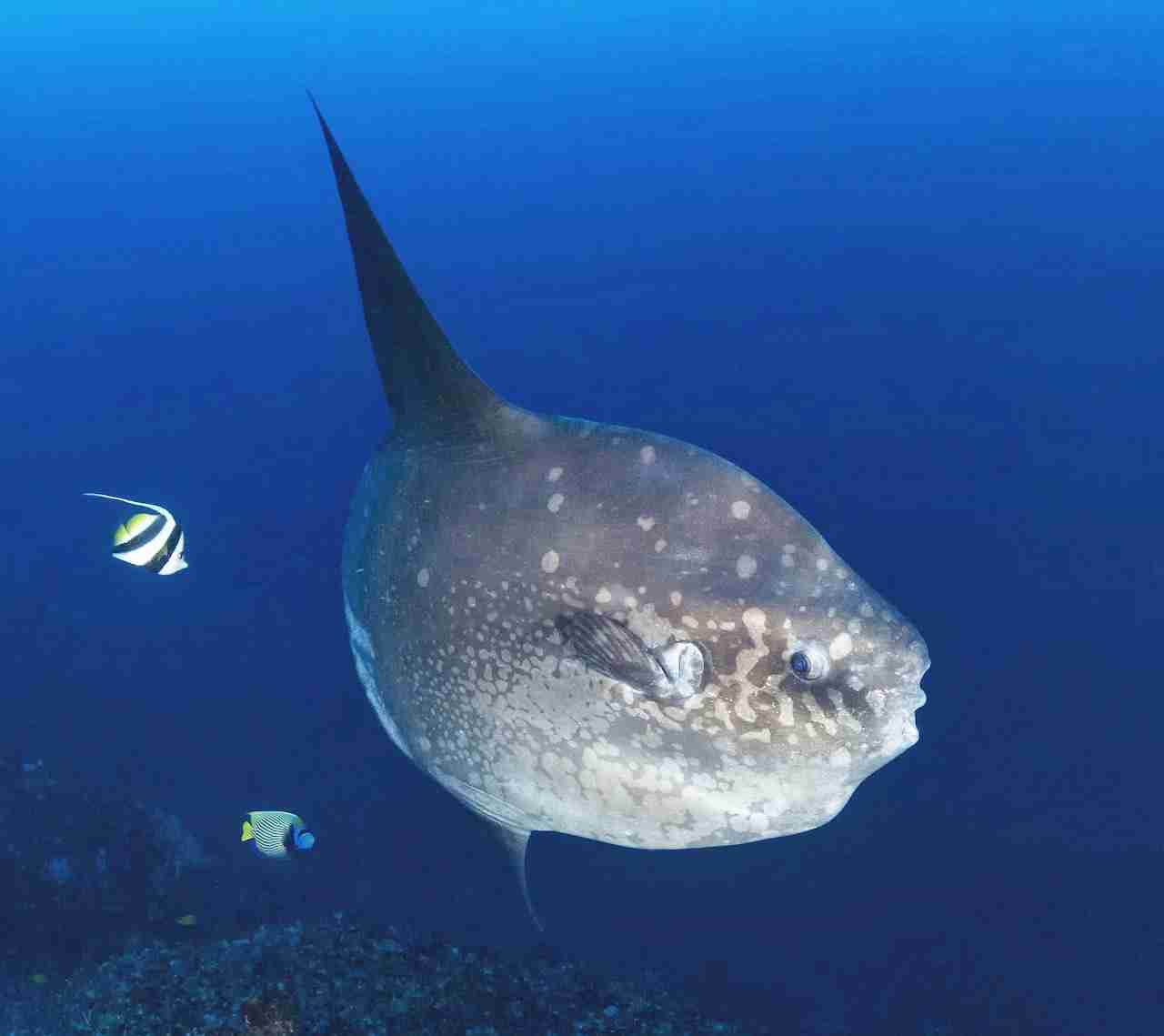
Large fish species are often spotted here, including seasonal sunfish, great barracuda, jacks and trevally. Reef fish here are abundant as they flock to this reef-like structure on Tulamben’s sandy slopes. Heading back towards shore on your dive you’ll see a huge colony of spotted garden eels at around 5 meters – the shallowest part of the wreck. Turtles, string rays, an array of nudibranch, scorpionfish and even pygmy seahorses are spotted here – there is plenty of variety for all!
Many of the wrecks features are still intact and highlights include the cannon (which was fitted during the way years), the captains wheel and the doorway into the cargo hold – which also makes a nice swim through. The deepest part of the wreck is the keel at around 28 meters and in this area there are also penetration possibilities.
- Best dived from Two Fish Divers Amed Resort or Two Fish Divers Sanur (day trips from South Bali)

Japanese Wreck – Amed, Bali
Just off the beach in Lipah Bay near the small village of Banyuning lies the “Japanese Wreck”. Little is known about the origins of this wreck – including if it is actually Japanese! It seems like the Asian style toilet found on the wreck led people to believe that it may have come from Japan – but there are few other indicators. It appears that the “Japanese Wreck” was a tug boat of some kind but the structure is now quite broken up so identification is not easy.
In fact, the only indication I could find about its heritage is that the nearly intact Asian style toilet found on the wreck made somebody in the past think that the ship must have been from Japan.
This is a shore dive and once in the water it’s just a short surface swim and you can descend over the wreck. The depth on the wreck varies from just 6m, down to about 12m, and it lies on silty sand that can easily be stirred up so good buoyancy control is essential. (Check out this month’s special offer of free PADI Peak Performance Buoyancy Specialty Courses here).
The wreck is now decorated with numerous, large gorgonian fans, sponges and general marine life – with the area around the stern being particularly colourful. The large propeller is still attached and is so encrusted with coral growth that it takes a few moments to actually recognize what it is!
Quite how the wreck ended up on the beach at Banyuning would certainly be an interesting story because the condition of the wreck, with its large marine diesel engine, sat bolt upright in the deeper water and surrounded by crankshafts and other engine room debris, points to quite a violent end to its life afloat.
- Best dived from Two Fish Divers Amed Resort or Two Fish Divers Sanur (day trips from South Bali)

Boga Wreck – Kubu, Bali
The Boga wreck was sunk purposely for wreck diving in 2011 to form an artificial reef on the sandy slopes of Kubu. The wreck has now started to develop coral growth and it attracts a wealth of marine life. The wreck lies at between 18 and 40 meters and many of the features of the wreck are still intact including the wheel. Other objects were sunk with the wreck including cars and statues.
Numerous species of fish now inhabit the wreck including schools of curious batfish, great barracuda, moray eels, lionfish, scorpionfish and schools of glassfish. The Boga wreck is ideal for wreck and deep diving specialty courses as well as for advanced level fun divers.
- Best dived from Two Fish Divers Amed Resort or Two Fish Divers Sanur (day trips from South Bali)

-
Jepun Wreck – Padang Bai, Bali
The Jepun wreck in Padang Bai takes its name from the dive site Jepun. This wreck of a recreational speed boat is one of the highlights of the dive site and it lays at a depth of 20 Meters. The wreck attracts large schools of glassfish which reside in the front of the cabin and in turn attract larger fish. Look out for hungry lionfish hunting, moray eels hiding out in the darkest corners, scorpionfish camouflaged against the sides of the boat and an array of nudibranch on the sand nearby. Other highlights of this dive include occasional frogfish, stingrays, octopus, cuttlefish and even rhinopias!
- Best dived from Two Fish Divers Amed Resort or Two Fish Divers Sanur (day trips from South Bali)

Mawali Wreck – Lembeh, North Sulawesi
The most famous and the largest of the wrecks in the Lembeh Strait is the Mawali Wreck. This Japanese freighter sank during World War II due to a fire. The reck now lays on its port side with its propeller still intact. The wreck ranges in depth from 15 meters to around 30 meters and it is home to a wealth of rare and unusual marine species – this is the Lembeh Strait after all! The depth range makes this an ideal dive for those with advanced open water certifications and Nitrox divers.
The deck side of the wreck offers fantastic photo opportunities in its cargo holes, its deck buildings – all of which are covered in very healthy hard coral, soft coral and sea fan growth. Besides Pygmy Seahorses, Nudibranchs and various crustaceans it also attracts bigger critters and fish, such as Cuttlefish, schools of Batfish, lionfish, Barracuda and dense schools of Glassfish.
- Best dived from Two Fish Divers Lembeh Resort or Two Fish Divers Bunaken Resort

Molas Wreck, Manado / Bunaken, North Sulawesi
The Molas wreck remained a mystery for many years and was thought to be of Chinese or Japanese origin. It now appears that this was actually a Dutch freighter ship that was sunk towards the end of World War II during 1945. At this time the last remnants of Dutch resistance were desperately trying to maintain their foothold on the colonies while Japanese forces still controlled the territories. Although sunk during wartime, some evidence suggests that this freighter was not downed by Japanese aggressors.
The Molas Shipwreck wreck takes its name from the nearby village of “Molas” on the shore. And it now lies at a depth between 22 meters at the bow, and 41 meters at the stern, where a still intact propeller can be found. The depth of this dive makes it suitable for advanced divers, those with a deep diver certification and Tec divers.
The marine life on the wreck is impressive and includes schools of snappers, batfish, lionfish, moray eels, nudibranch, numerous crustaceans and cephalopods and even the occasional reef shark patrolling the wreck.
- Best dived from Two Fish Divers Bunaken Resort or Two Fish Divers Lembeh Resort

Gili Japanese Wreck – Gili Islands, Lombok
The Gili Island’s Japanese wreck is a deep dive as the deepest point of the wreck sits at 45 meters. This dive is best suited to divers who have an advanced open water certificate and deep dive or Tec certification.
The wreck was a Japanese Patrol boat from World War II, it’s about 20 meters long and it is now home to a wealth of interesting marine species. Look out for numerous scorpion and lionfish which hunt here, frogfish, nudibranch, schools of fish and even the occasional passing reef shark. This is a beautiful dive from start to safety stop.
- Best dived from Two Fish Divers Gili Air Resort

Ready For Wreck Diving?
Have we whetted your appetite for wreck diving? Are you ready to explore some of Indonesia’s most exciting and vibrant wrecks? If you are not yet PADI Advanced Open Water Certified why not take your course with us and include wreck diving as one of your course components? Do you want to learn more about wreck diving? The PADI Wreck Diver Specialty will give you a more in-depth understanding of wreck diving and includes penetration techniques too.
If you’d like to make a reservation or for more information about diving with us or taking your next level of PADI certification, fill out the form below and we’ll get right back to you. Do you want to dive and save? Check out our latest special offers here (special offers must be mentioned when booking)
We look forward to exploring some of Indonesia’s wrecks with you soon!